
The Great Green Wall: political ecology of a phantom project
The Great Green Wall (GGW) was launched in 2007 as an ambitious tree planting project meant to create a vegetation barrier over a length of approximately 7,000 km from the Atlantic Ocean to the Red Sea along the Sahelian region in Africa. It was led by Presidents Obasanjo (Nigeria), Khadhafi (Lybia) and Wade (Senegal) and promised to restore 100 million hectares of degraded land and create around 10 million jobs across 11 of the poorest countries on earth.
“The story of the GGW is one in which failure is proportional only to its ambition.”
Endorsed by the African Union (AU), such a visionary mega-development project received broad financial support from the UN, financial institutions and other international stakeholders. However, while in these 15 years there has been some activity, very few achievements can be considered as ‘bricks’ in this wall. On closer examination, the story of the GGW is one in which failure is proportional only to its ambition.
Yet, failure is not simply the non-realisation of a project, but a mobilisation of financial, discursive, and material resources that, while not achieving the stated objectives, produces negative social, political, and territorial effects, particularly in localities meant to benefit. Failing projects act like ‘phantoms’, something that does not materially exist, but which nevertheless wields power and whose presence provokes reactions, discussions and financial movements.
In the GGW case, on the one hand we can easily note that satellite images presented on Google Earth provide very little evidence of any vegetation wall or barrier along the Sahel region. On the other hand, in places where the GGW project has touched down, negative consequences can be observed on various scales. This essay discusses both the failures and their consequences, starting with the narratives of the major international organisations and moving on to the village community level, passing through the strategies of nation states. We use a specific case study in Senegal to highlight the impacts of the GGW on the ground.
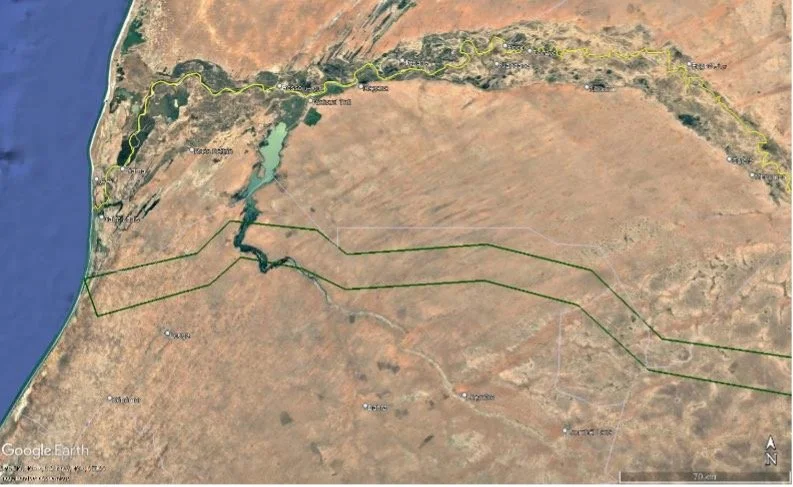
Fig. 1: The Great Green Wall project area in Senegal (Source: Google Earth)
“Despite the blatant lack of tangible results, GGW continues to be championed by the international community - discursively, materially and financially.”
The Ideological failure
The idea of building a vegetation barrier to “stop the desert” has its roots in the anti-desertification campaigns of the 1970s. Jeremy Swift showed the ideological character of these narratives, which were constructed from an agrocentric perspective that saw arid ecosystems as essentially degraded socio-territorial systems and was therefore incapable of recognising the nomadic territorialities of pastoralist groups made of flows rather than places, of movements rather than enclosures. Further, Michael Watts showed how these groups of nomadic pastoralists were usually targeted as prime culprits in land degradation. This is a strategy in which the ideology of eco-scarcity fuels land-engineering initiatives that are 'naturally' accompanied by policies of social control and state centralisation.
What is striking, first of all, is the mindlessness of imagining a reforestation initiative of more than 100.000 km2 (an area larger than Portugal), assuming the uniformity of those territories, especially after decades of failed development interventions due to the lack of involvement of local communities.
But despite the blatant lack of tangible results, GGW continues to be championed by the international community - discursively, materially and financially - and even if its narrative has slightly shifted from reforestation to a more general “soil restoration”, the websites of the GGW still feature dystopian renderings of reforestation (Fig. 2). More concretely, the GGW is discussed at major international meetings as if it existed, and the institutions that promote it continue to function. Probably the most significant effect of this ‘phantom-like’ wall concerns the debate on climate change and the diversion of attention from urgent reduction of fossil fuel consumption to “phantom” CO2 compensation results through reforestation.
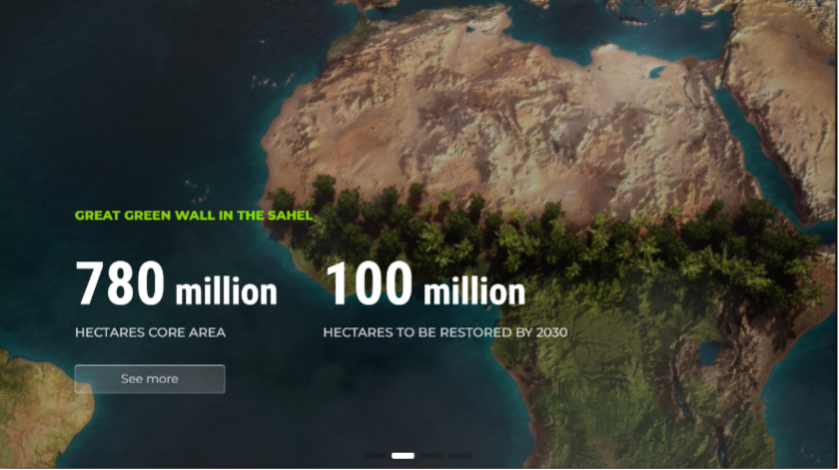
Fig. 2: Great Green Wall in the Sahel (Source: FAO)
A geopolitical failure
While promoted as a pan-African initiative, the GGW is in fact the vision of Senegal’s president Abdoulaye Wade (in office 2000-2012), supported by the diplomatic efforts of Nigeria’s Olusegun Obasanjo (1999-2007) and fuelled by Mu'ammar Khadafi’s Libyan petrodollars. Self-described Pan-Africanist and supporter of mega-development projects, Wade steered the GGW vision and managed its implementation, creating a governing body of 11 Sahelian states to engage with external funders to turn the GGW into a key driver for regional integration. Serving Wade’s continental ambitions to establish Senegal as an African powerhouse and re-launch the struggling vision of an “African Renaissance”, however, the GGW did not live up to expectations. After the grandiose launch, the GGW took a backseat as more urgent problems challenged the member states: political rebellions in Niger (2009, 2012) and war in Mali (2012-), jihadist insurgencies in Mali, Niger and Burkina Faso (2015-), the Boko Haram insurgency by Lake Chad (2012-), the second Chadian civil war (2005-9), the continuing war in Darfur, the partition between North and South Sudan (2011) and the Sudanese revolution (2018), the Eritrean-Ethiopian border conflict, conflicts with Afar and Oromo in Ethiopia.
In this unstable political context, the GGW project, regardless of its results on the ground, was also an attempt to fund governments that gravitated around the Western sphere of influence. The fact that several governments, such as Burkina Faso, Mali, and Niger, not only shifted to decidedly anti-Western positions, but also moved to confrontational positions against regional and continental organisations (e.g., ECOWAS, AU), represented the central geopolitical shortcomings of the project. The case of Senegal is particularly important because the current government appears to be trying to balance two goals: reducing French influence while continuing to access funds provided by the Great Green Wall (GGW) project.
A national failure: The case of Senegal
Senegal was one of the founding countries of the GGW and likely the model pupil of the project: successive governments have invested not only significant sums of money in the GGW project but also their own political credibility. Since 2007, for example, both the presidencies of Wade and Macky Sall (2012-24) have included the GGW within their development strategies. A national agency (now Agence Sénègalaise de la Reforestation et de la Grande Muraille Verte), placed under the Ministry of Environment and Ecological Transition, was created to manage the project and has been in operation since 2008.
In a first phase (2007-2020), several interventions were carried out in the North-East of the country – the Ferlo region – and in particular in the Six Forages (Six Wells) reserve. This region has very limited water resources. As its name suggests, several initiatives have been implemented to provide safe water access while also encouraging the settlement of the nomadic populations living there.
The Ferlo Region is a very difficult setting for a reforestation project, given the challenging access to water necessary for the survival of the saplings in their early years. Its success would have required either extraordinary state intervention, almost impossible for financially fragile governments, or extensive involvement of local communities, mainly consisting of nomadic Peul pastoralists, which did not happen. On the contrary, analysis of the initiatives implemented shows that, the project is based on large-fenced reserves aimed at excluding the transit of people and animals, thus disregarding the views and priorities of pastoralist groups.
This disconnection from the local community, combined with the difficulty of direct action by public authorities, has led to a lack of follow-up in the early stages of plant growth that has resulted in a low survival rate of the trees: if one looks at the region today, it is often difficult to distinguish areas where reforestation has occurred from those where vegetation has evolved spontaneously (Fig. 3).
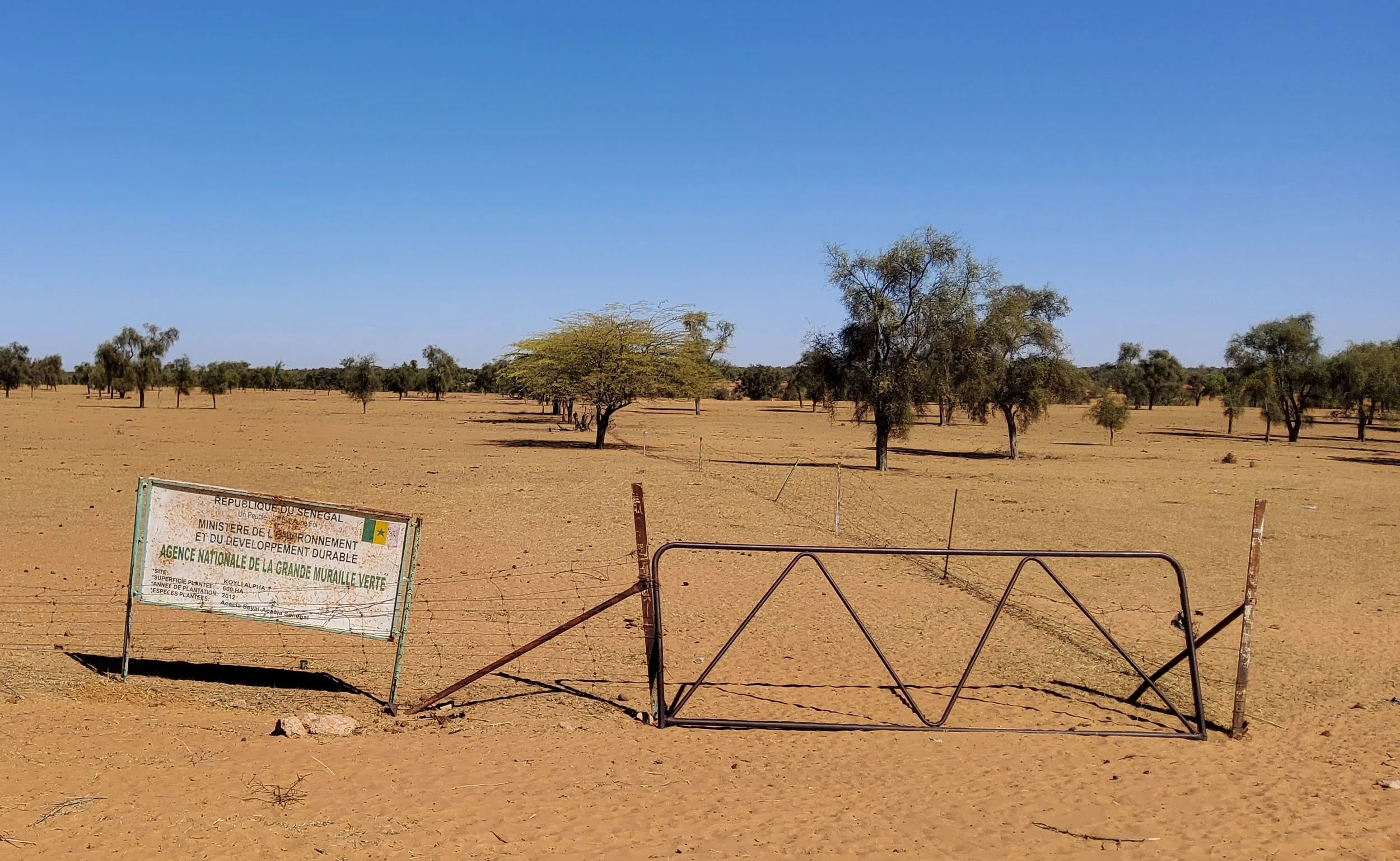
Fig. 3: Traces of the GGW project in Koyli Alpha (Photo: Valerio Bini, 2025)
Local failures: Koyli Alpha and Windou
At the local level, we can follow the fortunes of the GGW by observing two areas where the reforestation project got started.
Set up originally between 2011 and 2016, the 600 hectares of reforested plot in Koyli Alpha are officially a Réserve Naturelle Communautaire (RNC) whose vegetation is mostly constituted by local varieties such as Balanites aegyptiaca, Acacia raddiana and Combretum glutinosum. Major re-planting took place in 2012 to replace dead seedlings, and the 600ha were fenced to prevent animal trespassing. But, as the logic behind the project remained unchanged, the replanted trees met the same fate as their predecessors (fig. 3).
Windou is the site of one of the six wells that gave the Six forages protected area its name. The village lies in the north of the Louga region, the area farthest from the axes of communication, and this is where the first actions of the GGW were concentrated, starting in 2008. The signboards of the projects that have followed one another stand rusted side by side, but the traces of the reforestation are minimal. About 500 meters from the well that feeds the area, one can see a perimeter of about 8 hectares, which served for the first experiments of the GGW and houses the multipurpose garden (jardin polyvalent), the only area where a vegetative difference from the context is visible. The largest reforestation interventions are located 5-10 kilometres from the village and thus from the water source. Here, the GGW panels are now illegible and a few short alignments of Balanites or Acacia senegal are the only evidence of the reforestation carried out years ago (fig. 4).
Post-failure practices: accelerate, expand, concentrate
After the initial momentum, the GGW has faced major difficulties, dragging its feet for almost a decade. Only in 2021 did France’s President Macron, during Paris’ One Planet Summit, promote the GGW “Accelerator”, endowed with $14.3 billion. Rather than a mere rebranding, the Accelerator was meant to pool financial resources, improve governance mechanisms and revive the project, by turning it from a tree-planting effort into a comprehensive rural development initiative. France’s renewed commitment to the project is clearly linked to the government’s largely unsuccessful attempt to keep the Sahel under French influence. The approval of the Accelerator produced a change of strategy in Senegal, along two apparently contradictory lines of expansion and concentration. First, the so-called Great Green Wall Integrating Project envisions the expansion of the project area from 800,000 to 9.5 million hectares, the whole area with average annual rainfall between 100 and 400 mm. The expansion, however, is not simply geographic, but also thematic, since the goal, rather than reforestation, seems to be the promotion of local development. Secondly, this strategy is implemented through a concentration of interventions around a series of Resilient Green Hubs (Poles Verts Résilients) in which small reforestation plots (0.5 ha), horticulture and other activities such as fish farming find their place.
It is too early to assess the effectiveness of this new phase of the GGW in Senegal, but two elements are crucial. First, while the concentration of interventions around a few hubs will make monitoring easier, it significantly reduces the scale of the project (from interventions covering thousands of hectares to interventions covering 0.5 ha each). Second, these Resilient Green Hubs have been designed in a rather standardised way, and therefore the lack of involvement of local communities that was at the root of the failure of the first phase seems to be repeating itself (for instance, the idea of developing fish farming in one of the hottest and driest areas of the country, mostly populated by pastoralists, certainly represents a challenge for the sustainability of the project).
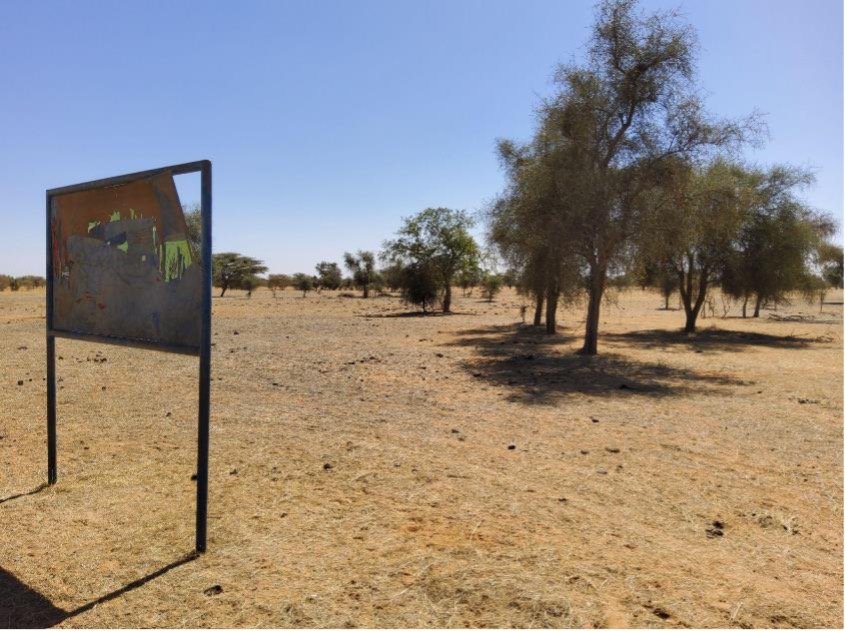
Fig. 4: Traces of the GGW project in Windou (Photo: Valerio Bini, 2025)
Phantom presences and zombie-projects
The GGW seems a prototype of how a major international cooperation program fails: outsized ambitions, application of an ideological view of society-nature relations, limited involvement of local communities, and a poor understanding of geopolitical shifts. However, the material failure of the project does not mean that it has had no effect: first, despite the evident failures, the GGW is still alive, like a ‘zombie-project’, and has recently been largely refunded; secondly, the ‘phantom presence’ of the GGW, even if only on a discursive level, continues to distribute costs and benefits unevenly, creating winners and losers.
Among the winners, we certainly find climate change deniers that, thanks to the GGW project, have gained time, fooling the international community into believing that this ambitious project could absorb a significant amount of carbon dioxide. Large fossil fuel companies such as ENI and Shell, for example, have made heavy investments in reforestation projects in Africa. The winners also include all government and non-government research and development bodies, located mainly, but not exclusively, in the Global North, which have benefited from funding to study and implement reforestation projects.
African governments have also won, having received resources to fund national agencies and other administrative structures that continue to function even though the trees have died.
“The paradox of these projects is that they often lose sight of their original purpose and instead become a way for African states to fund the basic operations of administrative structures—costs that neoliberal policies no longer support.”
Today, despite the failures of the GGW, the states involved, instead of slowing down and focusing on a few initiatives, choose to accelerate and expand the area of intervention. The negative outcome of these efforts is easily predictable, but perhaps therein lies the political economy of these large international projects, an “optimal failure” that makes it necessary to continue the project, but without being so absolute as to make its refinancing unpopular.
Finally, through large-scale projects such as the GGW, African governments consolidate their power at the national level and strengthen their presence in marginal areas such as the Senegalese Ferlo, imposing an alternative territorial order to that of nomadic pastoralists, the veritable excluded from the GGW project.
Much of the research and policy on environmental and development projects has focused on the effectiveness of the interventions. However, the power of projects such as GGW goes far beyond their ability to achieve their goals: for many actors, project failure is not a matter of concern, and in some cases, as Robert Fletcher reminds us in his book Failing Forward, can even be part of a strategy. What is needed, then, is a political ecology capable of reading not only the conflicts arising from the implementation of international cooperation interventions, but also those inherent in these ‘phantom’ projects that continue to exist without materialising.
---
Valerio Bini is an Associate Professor at the Department of Cultural and Environmental Heritage, University of Milan.
Alessio Iocchi is a Research Fellow at the Department of Political Science and International Relations, University of Palermo.