
Bargaining over job loss: trade union legitimacy in the UK steel industry
Chris McLachlan explores the legitimacy of trade unions in the restructuring of the UK steel industry.
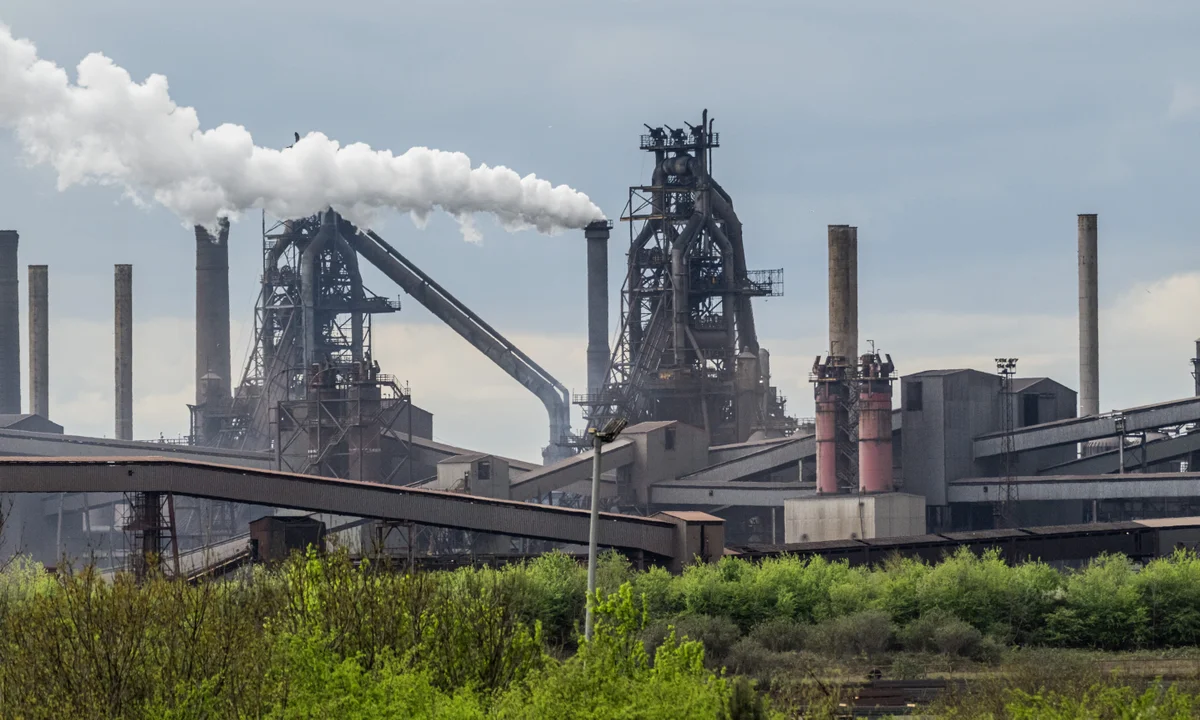
Trade unions in the UK steel industry are no stranger to crises. Frequent restructuring and episodic job loss has brought the legitimacy of unions to protect workers into sharp relief. Since the 1970s, technological developments in the organisation of work have reduced manning levels, the internationalisation of production has diversified producers in the global steel market (notably the oversupply of steel from China) and broader processes of deindustrialisation have denuded the UK’s manufacturing base. More recently, the UK steel industry has faced pressures because of its excessive carbon emissions, in which the blast furnace operation is one of the world’s worst polluters: the proposed construction of electric arc furnaces at the Port Talbot and Scunthorpe plants since 2024 have centred attention on the links between industrial restructuring and decarbonisation.
The biggest casualty of this episodic restructuring has been the workforce. Job loss and redundancy processes have become routine in the UK steel industry. The decline in employment levels is stark: 320,000 in 1971, to approximately 33,700 in 2024. In that time there have been high-profile plant closures too, including at Ravenscraig, Llanwern and Ebbw Vale. The more recent closure in 2015 of the SSI plant in Teesside was notable not only for the loss of around 2,000 jobs but also for its impact on the local community, ending centuries long traditions of steel making in region. Restructuring often has a profound impact on workers, through the loss of income, livelihoods and identity. Steel plants are typically the largest private sector employers in their regions, which means that restructuring or plant closure have a large knock-on effect on the social and economic life of its surrounding communities.
Trade unions and steel restructuring
In attempts to mitigate the effects of restructuring, trade unions that represent steelworkers play a key role. A high trade union density and public sector heritage, along with long-standing bargaining processes and collective agreements, has legitimised the union’s role in steel, and contributed to an established industrial relations system across the industry. For example, there has not been a strike in steel since 1980. This fact is remarkable, given the frequency of restructuring has affected so many through job loss, and industrial action has never been taken over redundancies in this time. Instead, any conflict between unions and management, over redundancies or otherwise, has typically been dealt with through the existing negotiation machinery.
“Any conflict between unions and management, over redundancies or otherwise, has typically been dealt with through the existing negotiation machinery.”
That said, unions clearly would not agree to job losses imposed by management. Unions exist to protect their members’ interests, and losing one’s job runs counter to this. The fate of the steel industry means it is often faced with no alternative but to restructure the workforce to survive: with privatisation, mergers, acquisitions and state rescue, the writing has been on the wall for some time. For unions in the steel industry, it may therefore be impossible to prevent job loss. Instead, in the context of industrial decline and the omnipresent threat of plant closure, the protection of workers’ interests is arguably better served through unions instead bargaining over the process and outcomes of restructuring. For steelworkers and their communities, the loss of some jobs is arguably preferable to loss of all jobs. For unions, their strategy is not based on preventing job loss but rather on managing restructuring in a way that mitigates its most pernicious effects.
Bargaining between unions and management, over restructuring or otherwise, can be broadly understood in two ways. The first can be characterised as a conflictual, adversarial approach, a fixed-sum game where each side aims to take more of the pie. In contrast, the second is based on joint problem solving and underpinned by a more cooperative approach, a variable-sum game where each side aims to instead share some of the pie. Restructuring in the steel industry has been mostly defined by the second approach: unions are forced to concede that some jobs losses are unavoidable, but with the compromise being they hold some influence over how restructuring is implemented. For example, a restructuring situation presents unions with potential to negotiate over reducing the number of compulsory redundancies, retraining and reskilling provision for displaced workers, negotiation timelines, consultation periods, severance packages and other employability support. These areas of negotiation may not in themselves prevent job loss. However, they allow unions to try and increase the package of support for affected workers, and potentially improve their post-redundancy outcomes by easing their transition into new employment.
Trade union legitimacy
Our research has shown that the success of bargaining is shaped by the extent to which unions have legitimacy to act in the process. Legitimacy is important because it is the glue that can bind and sustain union-management relations, and is considered a key resource underpinning unions’ bargaining power. In certain national systems, such as Sweden or Germany, legitimacy can be conferred upon unions due to their long-established status as industrial relations institutions, where the state is more accepting of their role in society.
“The success of bargaining is shaped by the extent to which unions have legitimacy to act in the process. ”
In the UK steel industry, plant-level collective agreements and the pluralist industrial relations climate can afford unions similar legitimacy when it comes to bargaining, especially over restructuring. As a result, steel unions can be seen as ‘taken for granted’ in relation to bargaining, where management also recognise their role in the process. Furthermore, management may also confer legitimacy upon unions to lend credibility to their restructuring plans amongst workers, who trust unions more, and to limit any negative repercussions by working jointly with unions. Importantly, unions also gain legitimacy from workers, and especially their members, where they may be morally obliged to bargain with management and do what they can to protect workers’ interests even in the face of job loss.
The legitimacy afforded to unions in the steel industry gives them a seat at the table when it comes to bargaining. This helps unions and management identify any shared goals of restructuring, such as ensuring firm survival, and lays the foundations for negotiation. However, this does not guarantee positive outcomes. As bargaining processes evolve, the unions’ role is vulnerable to ‘eleventh hour’ managerial prerogatives that undermine initial agreements. Unions’ legitimacy may be further exploited by management, such as through seeking additional cost-cutting through further redundancies late in the process, or by failing to credit the role played by the unions to the workforce. Accusations from workers that unions are too accommodating of managerial agendas can also threaten unions’ hand in the bargaining process. In turn, unions limited capacity to contest management decisions can weaken the legitimacy afforded to them by workers: by ‘getting into bed’ with management over restructuring, unions’ power as an independent actor from management is questioned. The bargaining process thus both impacts and is impacted by the role of legitimacy.
As long as the steel industry is threatened by parlous economic conditions and the exponential effects of structural decline, bargaining over the implementation of restructuring rather than its prevention will remain union strategy. Such a scenario depends on the continuation of their legitimacy as bargaining actors. However, bargaining over restructuring poses risks for unions as the process is not a single moment of compromise but can involve a gradual diminution of resources attached to their legitimacy amongst workers.
- - -
Chris McLachlan is a Senior Lecturer in Human Resource Management at Queen Mary University of London. His research explores the consequences of deindustrialisation and organisational restructuring for affected workers and communities, along with the associated industrial relations processes.